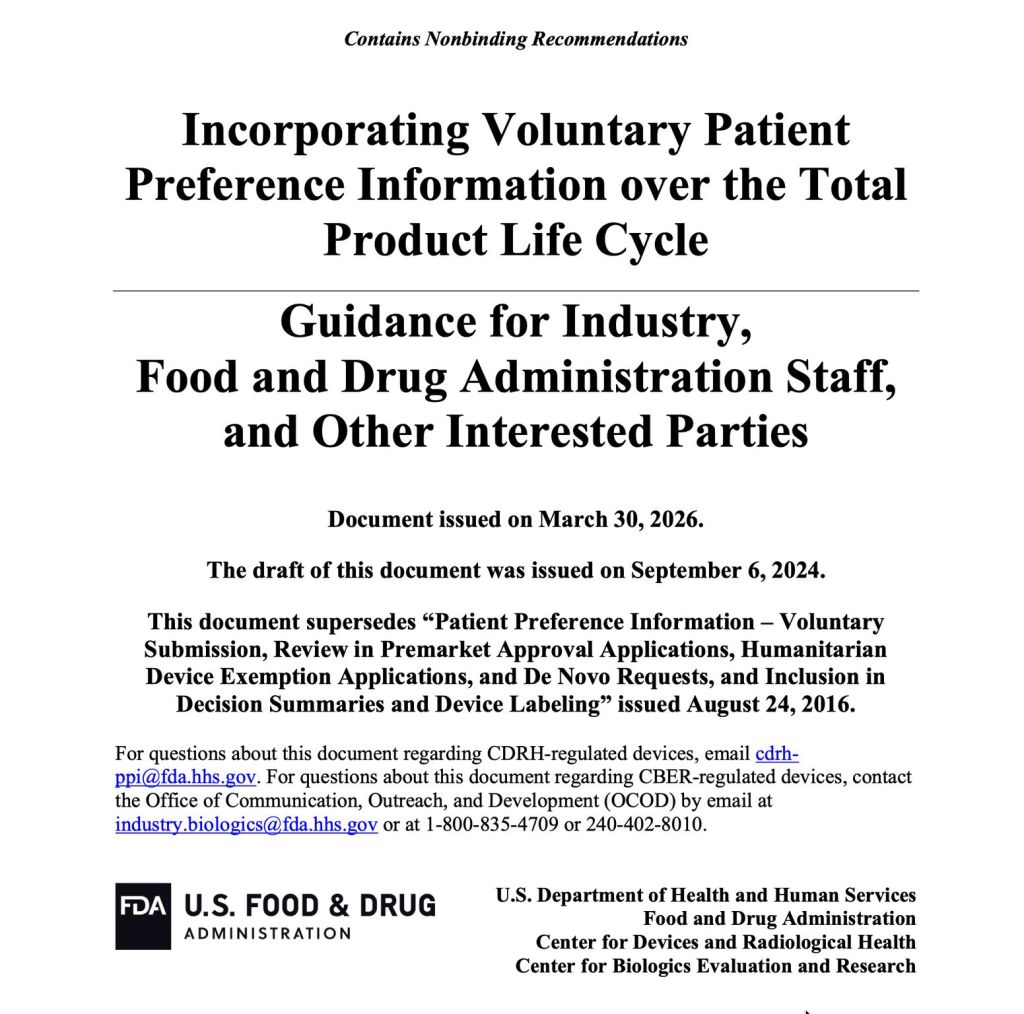
Jan Geissler, Founder and CEO of Patvocates, a think tank, consultancy and social enterprise on patient advocacy and patient engagement in research, has analysed the Food and Drug Administration (FDA)’s newly issued guidance paper titled “Incorporating Voluntary Patient Preference Information over the Total Product Life Cycle Guidance for Industry, Food and Drug Administration Staff, and Other Interested Parties” — a significant step beyond previous guidance which focused mainly on the pre-market phase.
Three points stand out.
First, the Food and Drug Administration explicitly recognises patient organisations and academia — not just industry — as legitimate generators of patient preference information evidence, and actively encourages their submissions.
Second, patients are given a more substantive role, being involved in shaping study design and interpreting results, not merely consulted.
Third, comparing the two major regulators, the Food and Drug Administration is operational and prescriptive — telling the field exactly how patient preference information should be designed and submitted.
Patient advocacy groups such as FasterCures have welcomed the expanded scope but are calling for greater investment in building capacity within patient organisations to contribute meaningfully. As Patvocates concludes, the real question is no longer whether patient preference information belongs in regulatory decision-making, but who generates it, how rigorously, and with whose agenda in mind.
Read more at this link on LinkedIn
You can find the original Food and Drug Administration paper here