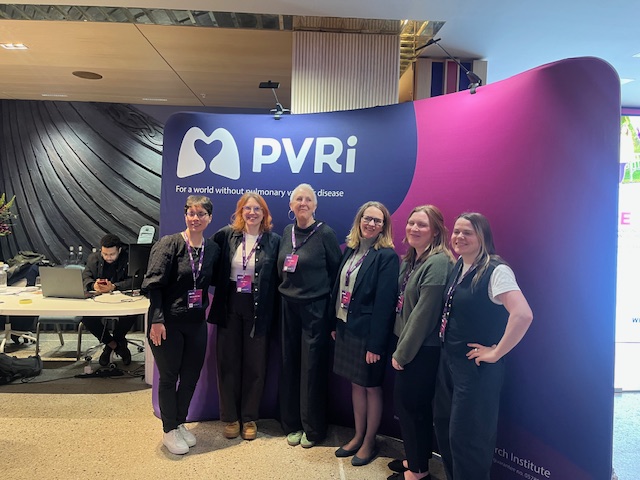
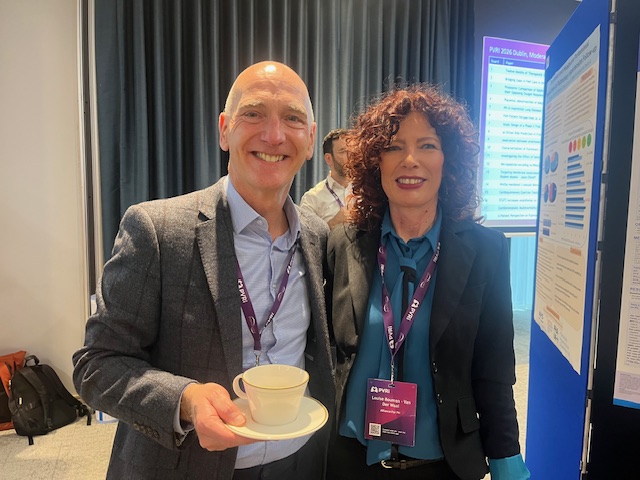
Louise Bouman attended the Pulmonary Vascular Research Institute conference in Dublin on behalf of the Alliance for Pulmonary Hypertension, of which she is a Board Member. You can find her key highlights summary at this link and the full report below. Louise also attended a “Women in Pulmonary Hypertension” lunch, which you can read about here
Day 1 PVRI Congress 2026
Session 1 Sotatercept from clical trials to emerging insights
Sotatercept From clinical trials to real world data & pearls from practice
Ioanna Preston
Ioana Preston presented an overview of all published studies on sotatercept, with a particular focus on long-term and real-world data.
The SOTERIA open-label extension (OLE) study has now been ongoing for three years. Key observations from this long-term follow-up include:
- Safety profile: The risk of adverse events does not increase with prolonged use; incidence rates remain stable over time.
- Sustained efficacy:
Sotatercept maintains its therapeutic effect, with patients remaining in low WHO functional classes.
Adverse events:
- Bleeding events occurred in 58% of patients, of which 9% were classified as serious bleeding events.
- Thrombotic events were reported in 8% of patients, with 3% being serious thrombotic events.
- Rare adverse events were also discussed:
- Hypoxemia occurred in two patients with congenital HPAH after approximately two years of treatment. Therapy was discontinued in both cases. An open question remains whether treatment at a lower dose could be feasible in such patients.
- Pericardial effusion was observed in 24 patients. This adverse event was not reported in shorter-duration trials. This raises questions regarding optimal screening strategies and whether routine screening should be implemented.
Vascular remodeling effects: how else does sotarecept work?
Ardeschir Ghofrani
Prof. Ghofrani reviewed emerging insights into the vascular remodeling effects of sotatercept in pulmonary arterial hypertension, highlighting mechanisms beyond its established activin/BMP pathway modulation.
Key points included interactions with background pulmonary arterial hypertension therapies, potential efficacy as monotherapy, and the so-called “hemoglobin riddle.” He discussed hemodynamic improvements, including reductions in pulmonary vascular resistance, and the observed disconnect between BNP/NT‑proBNP levels and vascular responses. Preclinical and clinical data suggest that sotatercept may also influence inflammation, oxidative stress, and metabolic signaling. Understanding these mechanisms is essential to clarify its full therapeutic potential and guide future research.
Abstract: Sotatercept from clinical trials to emerging insights
Sarah-Eve Lemay
Even though the average pressure in the pulmonary artery decreased, current clinical trials showed no improvement in right heart function after 24 weeks of treatment. Recent data also showed a higher number of cases of fluid around the heart, without clear benefits for right heart function.
Preclinical studies suggest that activin signaling plays an important role in heart repair. This raises extra concerns about the heart safety of sotatercept.
Objective of this research:
To study the direct effects of sotatercept on the right side of the heart in preclinical models using rats.
Conclusion:
The results suggest that sotatercept does not improve right heart function and may reduce the strength of heart muscle contraction. Research is ongoing to better understand its effects on heart relaxation, as some positive effects on relaxation have been observed.
⸻
Session 2: Translational insights into promising tagets & pathways
Mitochondrial & metabolic modulators for pulmonary hypertension: opportunities and challenges
Anna Hemnes
A promising metabolic target in pulmonary arterial hypertension is carnitine, a compound mostly obtained from dietary meat. Research shows that carnitine levels are lower in patients with PAH, which may contribute to problems with mitochondrial function and energy metabolism in the right ventricle and pulmonary vessels. Supplementing carnitine could represent a new therapeutic approach. Ongoing and planned studies aim to better understand how carnitine affects metabolism, mitochondrial health, and overall heart and lung function in PAH patients
Is the basement membrane a novel therapeutic target in pulmonary arterial hypertension?
Grazyna Kwapiszewska
Emerging evidence suggests that the vascular basement membrane plays a critical role in the development of pulmonary arterial hypertension, with particular emphasis on alterations in collagen composition. Elevated levels of specific collagen types within the basement membrane activate pulmonary endothelial cells, contributing to disease progression.
Collagen XVIII is notably overexpressed in pulmonary arterial hypertension, and its cleavage product, endostatin, is upregulated in experimental models of the disease. Endostatin therefore shows potential as a biomarker for pulmonary arterial hypertension. Importantly, treatment with sotatercept was shown to reduce endostatin levels, suggesting a possible interaction between sotatercept therapy and basement membrane remodeling.
Abstract: Translational insights into promising targets & pathways
Daniel Colon Hidalgo
Long-term breakdown of red blood cells and low oxygen levels cause the release of free hemoglobin and harmful oxygen substances. This creates an environment outside the cells that damages blood vessels.
More and more studies show that activated platelets and immune cells play an important role in pulmonary hypertension linked to sickle cell disease (SCD). However, it is still not clear how this imbalance outside the cells leads to problems with platelets and inflammation.
Preclinical research in mice is being done to better understand these processes.
Conclusion:
The results show that platelet activation and the movement of macrophages into the lungs are important factors in damage to the lung blood vessels in related sickle cell disease pulmonary hypertension. Ongoing studies aim to identify what triggers these processes and to explore whether they could be targets for future treatments to prevent damage to blood vessels in sickle cell disease .
Session 3: Two organs, one mission: the Right Atrium-Lung Alliance
Thenappan Thenappan
Highlighting growing interest in the role of the right atrium in pulmonary hypertension pathophysiology and clinical assessment.
Why the Right Atrium Matters in pulmonary hypertension
- Hemodynamic reflection of disease severity: In pulmonary hypertension, pressure overload of the right ventricle often leads to dilation and elevated pressures that are transmitted back to the right atrium. Right atrial pressure and function can therefore be direct indicators of the severity and progression of right heart involvement.
- Structural and functional changes: Enlargement or impaired function of the right atrium has been associated with worse outcomes in various forms of pulmonary hypertension and heart failure. These structural/functional alterations can be detected by imaging and may carry prognostic value.
- Potential for improved risk stratification: As a part of comprehensive right heart evaluation (alongside the right ventricle), the right atrium may help refine risk assessment and guide decisions about timing of therapy intensification or referral to advanced care. Emerging research is exploring imaging metrics (e.g., atrial size and strain) that could add value beyond traditional measures focused only on the pulmonary artery or right ventricle.
Clinical Scientific Context
Interest in right heart chambers beyond the left ventricle — especially the right ventricle and right atrium — has been increasing because of their strong influence on clinical outcomes in pulmonary hypertension. Studies show that right atrial enlargement and dysfunction are correlated with disease severity and clinical deterioration, reinforcing the idea that the “forgotten chamber” deserves more attention in both research and clinical practice.
The Misunderstood Chamber: Phenotyping the Right Ventricle
Rebecca Vanderpool
In pulmonary hypertension , the right ventricle is no longer seen as “just the chamber that pumps to the lungs.” Its function and response to pressure overload are now recognised as critical determinants of patient outcomes. The talk by Dr Rebecca R. Vanderpool — a recognised researcher in right ventricle physiology and pulmonary hypertension — centres on how the right ventricle adapts (or fails to adapt) to increased pulmonary vascular load and why phenotyping the right ventricle matters in both research and clinical care.
Why the Right Ventricle Matters in pulmonary hypertension
- The right ventricle’s ability to handle increased afterload from the pulmonary circulation is one of the main factors determining survival in pulmonary hypertension patients.
- Traditional measures (like mean pulmonary artery pressure) don’t fully capture right ventricular function or how the heart responds to pressure overload. Phenotyping aims to characterise right ventricular structure and behaviour in a more detailed way.
- “Phenotyping” means identifying distinct patterns of right ventricular structure and function — for example, degrees of hypertrophy, dilation, contractile response, and coupling with the pulmonary artery — that reflect adaptive vs maladaptive responses.
What “Phenotyping” Involves
- Detailed imaging (echo, MRI) and advanced metrics go beyond global measurements like ejection fraction, instead describing regional and functional characteristics of the right ventricle as it remodels.
- This may include assessing how the right ventriclemuscle thickens, how it contracts across different regions, and how well it couples with pulmonary vascular resistance — characteristics that can differ widely between patients and help explain why some adapt well and others deteriorate.
- Identifying these patterns can help clarify the prevailing mechanisms of right ventricular adaptation and failure, potentially leading to better risk stratification and more personalised treatment strategies.
Clinical and Research Implications
- Enhanced right ventricular phenotyping can reveal early signs of dysfunction before overt heart failure develops.
- Understanding diverse reht ventricular phenotypes may lead to novel biomarkers and help predict which patients are likely to progress versus those who remain compensated.
- Ultimately, this approach supports a shift away from viewing the right ventricle simply by global metrics, towards a multidimensional view of right heart health in pulmonary hypertension — recognising its complexity and central role in disease progression
Rupert Swift Award Lecture Pro-Inflammatory Epicardial Adipose Tissue as a Key Mediator of Right Ventricle Failure in Pulmonary Arterial Hypertension .
Manon Mougin
This reflects a growing research focus on how cardiac fat — specifically epicardial adipose tissue (EAT) — may actively contribute to disease progression in PAH, beyond its association with general body fat.
The concept behind Manon Mougin’s lecture ties into a major shift in how we think about pulmonary arterial hypertension: it’s not just vascular disease of the lungs but a systemic disorder involving metabolic, inflammatory, and cardiac interfaces.
Understanding epicardial adipose tissue:
- provides a more complete picture of right ventricular pathobiology
- may identify new biomarkers for earlier detection of maladaptive right ventricular changes
- could open new therapeutic avenues targeting local inflammation and metabolic dysregulation.
What can omics teach us about the right ventricle?
Soni Saval Pullamsetti
Omics means using modern methods like genomics, proteomics, transcriptomics and metabolomics to study many molecules (genes, proteins, metabolites) at the same time. These methods help scientists see detailed patterns in tissues that we could not see before.
In pulmonary arterial hypertension , the right ventricle of the heart works harder because of high blood pressure in the lungs. Whether the right ventricle adapts well or starts to fail determines how patients do overall.
Omics technologies help researchers:
• see which genes are turned on or off in the right ventricle as it adapts or fails, showing molecular differences between healthy and diseased states;
• find proteins and other molecules that are linked to right ventricle health, which could become biomarkers (things measured in blood or tissue to show how the RV is doing);
• understand changes in cell metabolism and energy use in the right ventricle, which are important in f right ventricular failure;
• identify groups of patients whose right ventricle changes follow similar “molecular patterns,” which can help predict outcomes or responses to treatment.
In short, omics teaches us about the molecular biology of the right ventricle — not just how it looks or how strong it pumps, but how its genes and proteins behave in health and disease. This deeper picture helps scientists and doctors understand why the right ventricle fails in some patients and could eventually guide personalised treatments.
Day 2 PVRI Congress 2026
Session 4: Pulmonary hypertension associated with lung diseases hope or hype?
Progress in lungdisease: hype or hope?
Oksana Shlobin
In this keynote lecture, Dr Oksana Shlobin explores where we really are with pulmonary hypertension that develops from chronic lung diseases such as interstitial lung disease and COPD. She examines recent advances in research and treatment, and asks whether these advances represent true hope for patients or are still more hype without clear clinical benefit.
- Challenges in Group 3 pulmonary hypertension: pulmonary hypertension caused by lung disease has historically been hard to treat, with many past studies showing limited drug benefit and sometimes potential harm. This uncertainty raises the question: are we really making progress?
- Recent Evidence & Emerging Data: Shlobin likely reviews the latest clinical research and expert consensus on how best to diagnose and manage pulmonary hypertension in patients with lung diseases, and which treatments show promise — or not — in improving outcomes.
- Need for Better Trials & Phenotyping: A key part of moving forward is understanding the different phenotypes (subtypes) of lung disease‑associated pulmonary hypertension, and designing smarter clinical trials to test therapies where they may actually help.
- Practical Clinical Perspective: As a clinician scientist, Shlobin bridges the gap between research findings and what this means for everyday patient care — helping doctors understand how to apply emerging evidence while recognising limitations.
Bidirectional crosstalk between sleep and pulmonary arterial hypertension
Yassine Sassi
This talk focused on the growing evidence that sleep and pulmonary arterial hypertension affect each other in both directions.
Emerging research shows that many people with pulmonary arterial hypertension also have poor sleep quality, and this is more than just a symptom of the disease — poor sleep may actually make pulmonary arterial hypertension worse.
Studies in animal models suggest that pulmonary arterial hypertension can lead to poor sleep, and in turn, sleep problems can increase inflammation in the lungs, make blood vessels remodel more, and worsen right heart function. In mice, poor sleep increased pulmonary vascular remodelling, right ventricular dysfunction, and the severity of pulmonary arterial hypertension .
This research introduces the idea of a vicious cycle:
- Pulmonary arterial hypertension leads to disrupted sleep,
- Disrupted sleep increases lung inflammation and vascular stress,
- This worsens pulmonary arterial hypertension progression.
Because of this, the talk highlights that sleep quality in pulmonary arterial hypertension patients is important and may be a potential target for improving outcomes. Some early evidence suggests that improving sleep — for example with sleep‑promoting treatments or anti‑inflammatory approaches — might reduce disease progression, though more work is needed.
Rapid pro-con debate: should we ever treat pulmonary hypertension associated with COPD?
Gabor Kovacs and Katarine Zeder
Core Take‑Home Messages:
• Pulmonary hypertension associated with COPD is a complex and heterogeneous condition — not all patients are the same, and the degree of vascular versus airway pathology varies widely.
• Observational data suggest that some treatments (e.g., PDE5 inhibitors) may be associated with improved survival in selected patients, but this evidence is not yet definitive due to the lack of randomized controlled trials.
• Most guideline recommendations continue to emphasize optimizing underlying lungdisease management first, with therapeutic decisions individualized based on multidisciplinary assessment and patient phenotyping.
• The debate reflects a key ongoing challenge in practice: balancing potential benefit vs uncertain evidence — a nuanced decision that requires careful clinical judgement and often referral to pulmonary hypertension specialists.
Session 5: Global aspects of pulmonary hypertension
What is the real global burden of pulmonary hypertension?
Sandeep Sahay
Pulmonary hypertension is a worldwide health issue, affecting millions of people, though it is underrecognized and underreported in many regions. Traditional data sources often focus on selected patient registries or specific subtypes (like pulmonary arterial hypertension alone), which underestimate the true global impact.
Estimated Prevalence & Impact
- Recent modelling suggests that pulmonary hypertension of all causes may affect roughly 0.6 % of adults aged 20–79 worldwide, which may translate to an estimated ~31 million people globally with mild to severe pulmonary hypertension . This includes pulmonary hypertension due to left heart disease, lung disease, chronic thromboembolic pulmonary hypertension , and pulmonary arterial hypertension.
- Population‑based data from the Global Burden of Disease (GBD) study estimate ~192 000 people worldwide with (pulmonary arterial hypertension WHO group) in 2021, with 22 000 deaths attributed to pulmonary arterial hypertension. The disease disproportionately affects older adults and females, and while age‑standardised mortality and disability rates have improved over time, the overall burden remains substantial.
Challenges in Measuring Burden
- Pulmonary hypertension is often underdiagnosed, especially in low‑ and middle‑income regions, because right heart catheterisation — the diagnostic gold standard — is not widely available.
- Most global health organisations do not currently list pulmonary hypertension among the leading causes of cardiovascular mortality partly because comprehensive worldwide data are lacking, and pulmonary hypertension is frequently misclassified or grouped with other diseases in health statistics.
Global burden of paedriatic PH
Mary Mullen
Pulmonary hypertension in children — especially pulmonary arterial hypertension — is a rare but serious condition that affects the pulmonary circulation and can lead to right heart failure. Children develop pulmonary arterial hypertension for different reasons than adults, often linked to congenital heart disease and developmental lung disorders such as bronchopulmonary dysplasia.
- The incidence of paediatric pulmonary arterial hypertension has increased over the last three decades, reflecting a combination of better detection and population growth.
- Despite this, mortality and disability related to paediatric pulmonary arterial hypertension have significantly declined — mortality rates dropped by more than 50 % and disability‑adjusted life years (DALYs) also fell markedly between 1990 and 2021.
- These improvements are likely due to advances in clinical care, earlier diagnosis, and better multidisciplinary management.
- However, there are major regional differences: low‑income and low‑sociodemographic index regions still experience much higher disease burden and worse outcomes compared with high‑income regions.
- Neonates and younger children remain especially vulnerable, often facing the highest mortality rates within the paediatric pulmonary arterial hypertension spectrum.
These findings highlight both progress and persistent challenges: while paediatric pulmonary arterial hypertension mortality has decreased globally, the disease continues to impose a significant health burden — particularly in resource‑limited settings. Addressing this global inequity requires improved screening, greater access to care, and tailored health strategies for children with pulmonary hypertension.
Session 6: 20 years of progress in Chronic ThromboEmbolic Pulmonary Hypertension
Balloon pulmonary angioplasty techniques, outcomes and future directions
Hiromi Matsubara
Balloon pulmonary angioplasty is now a well‑established interventional therapy for patients with inoperable or residual chronic thromboembolic pulmonary hypertension — offering improvements in pulmonary blood flow, haemodynamics, right heart function, exercise tolerance and quality of life.
- Large registries and meta‑analyses consistently show that balloon pulmonary angioplasty results in significant improvements in pulmonary haemodynamics — with notable reductions in mean pulmonary artery pressure (mPAP) and pulmonary vascular resistance (PVR) — as well as better 6‑minute walk distance and World Health Organization (WHO) functional class.
- Contemporary data report excellent mid‑term survival after balloon pulmonary angioplasty , with three‑year survival above 90 % in experienced centres.
- Complications such as hemoptysis or vascular injury can occur but are less frequent in high‑volume centres and with careful technique
It was mentioned that most patients benefit from continuing riociguat after balloon pulmonary angioplasty. Only a small proportion of patients may eventually be able to stop the medication after their pulmonary pressures and cardiac function have stabilised. It was highlighted that in patients over 70 years old after Balloon pulmonary angioplasty should use and keep using riociguat. In these patients, Balloon pulmonary angioplasty alone may improve pulmonary pressures, but cardiac output often does not increase significantly. Adding riociguat helps to improve heart function and exercise capacity, complementing the mechanical improvements achieved by balloon pulmonary angioplasty. This combined approach can maximise clinical benefit while minimising residual symptoms, particularly in older or more fragile patients.
Should we treat Chronic ThromboEmbolic Pulmonary Disease with no pulmonary hypertension in the multimodel treatment ERA?
Irene Lang
Chronic Thromboembolic Pulmonary Disease refers to persistent pulmonary vascular obstruction from unresolved thromboembolic lesions after pulmonary embolism — with or without pulmonary hypertension at rest. Under modern definitions, these patients may have symptoms and exercise limitation even if resting mean pulmonary artery pressure does not meet criteria for chronic thromboembolic pulmonary hypertension (mPAP ≤ 20 mmHg).
The evidence base for treating Chronic Thromboembolic Pulmonary Disease without pulmonary hypertension is still evolving, and there are no large, definitive randomized trials yet answering this question.
What the Evidence Suggests
• Symptomatic Chronic ThromboEmbolic Pulmonary Disease patients without pulmonary hypertension can have exercise intolerance, dyspnoea, and abnormal haemodynamic responses to exercise. Even without resting PH, pulmonary vascular obstruction and microvascular disease can lead to symptoms.
• Interventional therapies like balloon pulmonary angioplasty have shown early promise in small observational series: balloon pulmonary angioplasty in Chronic ThromboEmbolic Pulmonary Disease without pulmonary hypertension has been associated with improved symptoms, reduced pulmonary vascular resistance, and better exercise capacity, with low complication rates.
• Surgery (pulmonary endarterectomy ) has similarly shown improvements in exercise capacity and functional status in some case series, though long‑term benefit and impact on progression to pulmonary hypertension are not yet fully established.
• Targeted pulmonary hypertension drug therapy has not been well studied in this population, and guidelines do not currently recommend routine use in Chronic ThromboEmbolic Pulmonary Disease without pulmonary hypertension at rest, in contrast to patients with established Chronic ThromboEmbolic Pulmonary Hypertension.
Summarised:In today’s multimodal treatment era — where pulmonary endarterectomy, BPA, and PH medications are all available — the decision to treat Chronic ThromboEmbolic Pulmonary Disease without pulmonary hypertension remains individualised, based on symptoms, functional impairment, exercise haemodynamics, and expert judgement. Evidence supports possible symptom and exercise improvements with interventional therapy in selected cases, but large definitive trials are still needed to guide broad recommendations.
Session 7: Translating innovation into pulmonary hypertension therapies
Abstract: Distinct right ventricular vs Left ventricular macrophage stress sesponses under unifrom hypoxia
Sue Gue
Right ventricular function is very important for survival in pulmonary hypertension. However, we still know little about how the immune system works in the right ventricle. Studies in the left ventricle show that CCR2 macrophages play a role in inflammation, immune cell recruitment, and heart remodeling. It is not clear if the same happens in the right ventricle.
Conclusion:
This preclinical study shows that during low oxygen levels (hypoxia), macrophages in the right ventricle respond differently than those in the left ventricle. Right ventricular macrophages show higher immune and metabolic activity caused by mechanical stress and oxidative stress, while the left ventricle remains more stable. This specific immune response in the right ventricle may drive heart remodeling and could be a new treatment target in pulmonary hypertension.
DNA Lesions and Epigenetics: From Complex Repair Mechanisms to Practical Use
Steeve Provencher
This lecture explained how DNA damage and epigenetics play a role in pulmonary hypertension. In pulmonary hypertension cells in the lung blood vessels are often exposed to oxidative stress and inflammation, which can damage DNA. When DNA repair does not work properly, cells may grow too much and do not die when they should. This contributes to vascular remodeling, a key feature of pulmonary hypertension.
Epigenetics refers to changes in gene activity without changing the DNA itself. These changes can switch genes on or off and influence how cells behave. In PH, abnormal epigenetic changes may worsen inflammation and abnormal cell growth.
The lecture showed how understanding these mechanisms can help develop new biomarkers and future treatments, moving research from the laboratory to practical clinical use.
Day 3 PVRI Congress 2026
Session 8: Precision Medicine & artificial intelligence in pulmonary hypertension
Keynote: The Promise of AI
Bradley Maron
This lecture explained how artificial intelligence (AI) could help in pulmonary hypertension. AI uses computers to find patterns in large amounts of data, like medical records, imaging, or lab tests. This can help doctors detect pulmonary hypertensionearlier, predict which patients are at higher risk, and choose the best treatment for each person.
AI can also support precision medicine, by identifying groups of patients who may respond differently to treatments. It can make medical tests faster and easier, for example by analysing images automatically.
The lecture also discussed challenges: AI tools need high-quality data, careful testing, and ethical use. AI should help doctors make better decisions, but not replace them.
Conclusion:
AI has great promise to improve diagnosis, treatment, and outcomes for people with PH, but careful work is needed to use it safely and effectively.
Keynote: Precision Medicine in Pulmonary Hypertension — The Promise of Molecular Techniques
Jane Leopold
This lecture explained how precision medicine can change the way we understand and treat pulmonary hypertension (PH). Precision medicine means looking closely at the molecular and genetic parts of the disease to better understand why different patients respond differently to treatments. Pulmonary hypertension is not the same in every person — even if they look similar by symptoms, the disease can be very different inside the body.
Scientists now use molecular techniques such as studying genes, proteins, and cell metabolism to find specific patterns in each patient. These detailed analyses (often called omics) can help doctors:
- Find new biomarkers for earlier and more accurate diagnosis,
- Group patients with similar disease types rather than just symptoms,
- And develop targeted treatments that match each patient’s biology.
This approach may lead to better outcomes because treatment choices would be based on what is happening inside the lungs and blood vessels at a molecular level, not just on clinical symptoms. It also promises future opportunities to predict who will respond best to which therapy.
AI‑Enhanced Risk Models for Pulmonary Hypertension Survival
David Kiely
This talk focused on how artificial intelligence (AI) can help doctors predict survival in pulmonary hypertension (PH) more accurately. Traditional risk scores use a few clinical measurements, but artificial intelligence can combine many types of data — like age, symptoms, imaging, and lab results — to make stronger risk models. Artificial intelligence models can learn patterns that humans might miss.
Recent research shows that artificial intelligence can take information from CT scans and other tests and use it to find features linked to a higher risk of death. For example, AI‑measured lung fibrosis on CT scans was shown to help predict survival better than usual scoring alone in pulmonbary hypertension patients.
The session likely covered how artificial intelligence based models can:
- Improve risk prediction by combining many data points,
- Help doctors decide who needs more intense treatment or closer monitoring,
- Support personalised medicine by tailoring risk estimates to each patient’s profile.
While artificial intelligence looks promising, speakers also stress the importance of quality data, careful testing of models, and safe clinical use before they become routine in everyday care.
Session 10: Innovative concepts for future thinking in pulmonary hypertension
Keynote: Remote monitoring for pulmonary arterial hypertension: Is it time?
Raymond Benza
This talk discussed whether it is now practical and useful to use remote monitoring for people with pulmonary arterial hypertension (PAH). Remote monitoring means collecting health information from a patient outside the clinic or hospital, often using a small implanted sensor or special device.
In pulmonary arterial hypertension, doctors usually check pressures and heart function during clinic visits or with right heart catheterisation, but these tests are infrequent and not continuous. Remote monitoring technology — especially implantable pulmonary artery pressure sensors — can collect daily or continuous data directly from the patient’s heart and lungs at home. This gives doctors more accurate and frequent information about how the disease is changing.
Studies already show that remote pulmonary artery pressure monitoring is safe and can help doctors see changes early, guide treatment changes, and reduce the need for repeated invasive tests. It may allow doctors to adjust treatment sooner and prevent worsening symptoms or hospital admissions.
The lecture likely explored the potential benefits and challenges of adopting remote monitoring in pulmonary arterial hypertension care, including:
- How remote data can improve personalised treatment decisions,
- Ways to use remote monitoring in research and clinical practice,
- The current evidence supporting its use and the need for larger studies before widespread clinical adoption.
Conclusion: Remote monitoring has great promise to improve the care of people with pulmonary arterial hypertension by providing real‑time information, but more work is needed to understand how best to use it in everyday practice.
Session 11: The future hope of living life tot he full with pulmonary hypertension
Living with pulmonary hypertension: life in harmony with research and innovation
Alex Rothman
This talk looked at how people with pulmonary hypertension can have a better life by combining new research and new ideas with everyday living. It explained that research is not only about finding new medicines but also about understanding what daily life with PH is like for patients, including their challenges and strengths.
The lecture highlighted that innovation in science and medicine — such as new treatments, technologies, and ways to monitor health — can help people with PH live fuller and more active lives. At the same time, research must focus on real life, not just clinical tests, so that improvements truly benefit patients’ daily routines and wellbeing.
Overall, the message was that living with PH and scientific progress should go together: research should help people live better lives, and patient experiences should help guide research directions
Modifying lifestyle live life to the full with pulmonary hypertension
Ciara Mc Cormack
This lecture was about a holistic lifestyle programme for people living with pulmonary hypertension . Ciara McCormack is a clinical exercise physiologist and researcher in Ireland who has worked to help pulmonary hypertension patients improve their daily lives through safe exercise and lifestyle changes.
Many people with pulmonary hypertension used to be told not to exercise because of safety concerns. Recent research has shown that exercise can be safe and helpful for PH patients when it is done in the right way. Ciara developed a home‑based exercise and lifestyle programme that allows people with PH to be physically active, build strength, and feel better in their daily life.
The programme includes:
- Education about pulmonary hypertension and physical activity, so patients understand how to exercise safely.
- Exercises that patients can do at home, such as walking, cycling on a home bike, and gentle activities that improve fitness.
- Support to help patients make lifestyle changes that fit into their own life and needs.
The aim is to help people with pulmonary hypertension increase their physical ability, improve quality of life, and feel more confident and independent in daily activities — while staying safe and working together with their healthcare team.
Photo captions, from upper left clockwise: Women’s lunch with Deimante Hoppenot, Sylvia Klomp, Beau Neep, Tamara Rodenburg and Esther Nossent; the PVRI Team; presentation by Ciara McCormack; Louise Bouman with David Kiely; Louise Bouman with Tamara Rodenburg and Sylvia Klomp, PhD at UMC Amsterdam; Louise Bouman with Dr. Karin Boomars, Jop Schneijdenberg and Prof. Berger; Louise Bouman with Christina Grimm, Chiesi; Gala dinner with Matthijs Kruk, Gossamer, Silvia Ulkrich and Prof. Luke Howard; Former President of PVRI Anna Hemnes and new President Brad Maron; last three photos: Alliance for Pulmonary Hypertension booth.