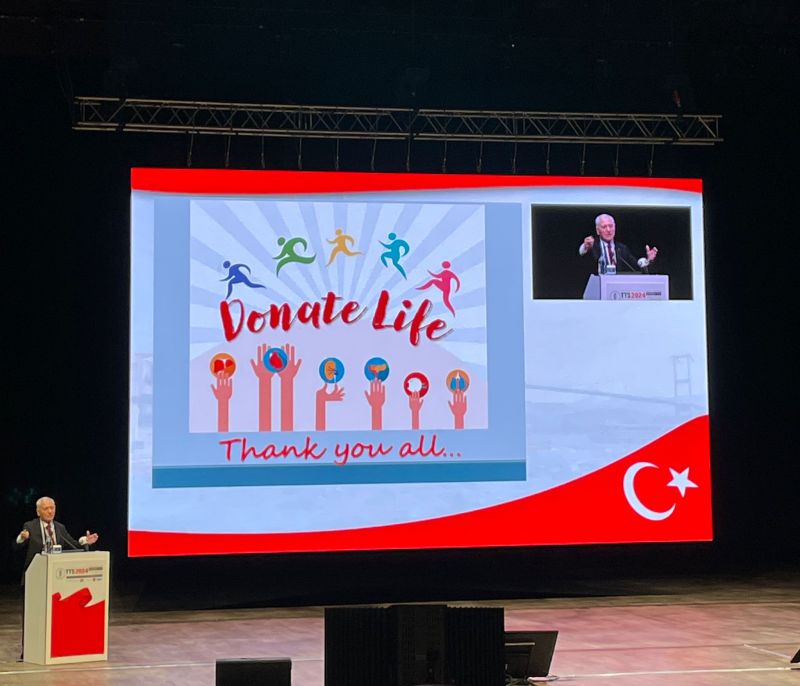
The 30th The Transplantation Society (TTS) Annual Congress in Istanbul brought together over 2.500 transplant professionals from 90 countries, with a further 500 attending remotely. It began with a memorable opening ceremony, attended by prominent figures such as the Minister of Health, the Governor, and the Mayor of Istanbul. The ceremony featured a compelling speech by Prof. Mehmet Haberal, Honorary Chair of the Congress, who reflected on the advancements in transplant surgery and shared moments from his distinguished career. His final slide is featured as cover photo and below.
🔹 One of the highlights of the evening was a performance by dervish dancers, which added a unique cultural touch to the event.
🔹 During the ceremony, numerous young investigators were honoured with awards for their contributions to the field, emphasizing the vital role that the next generation of medical professionals plays in advancing the future of transplantation.
🔹 The ceremony concluded with a touching keynote speech by multi-organ transplant recipient Adam Alderson. His personal journey underscored the profound impact of organ transplantation, reminding the audience of the lives saved and the importance of the work being celebrated at the Congress.
Pisana Ferrari, the Alliance for Pulmonary Hypertension’s Secretary General, represented the the association at the congress. She participated in a workshop on transplant education and attended several sessions dedicated to sex and gender issues in transplantation.
DAY 1, gender disparities in organ donation and transplant
On Day 1 Pisana Ferrari attended a session on gender disparities in organ donation and transplant. Speakers from Australia, Asia, and Latin America presented compelling data from their regions, highlighting the fact that whereas there are more women inclined to donate organs compared to men, they are less likely to receive transplants. They also underscored that this is a global issue.
🔹 Disparities stem from diverse factors such as cultural norms, socio-economic conditions, geopolitical influences, and differences in health literacy. Addressing these inequalities requires a multifaceted approach. Strengthening transplant infrastructure, fostering international collaboration, advancing research and knowledge exchange, and enhancing educational initiatives emerged as pivotal strategies during the discussions.
🔹 The speakers also emphasised that there are unique, gender-specific health issues faced by women that need more attention, both pre and post transplant, including considerations around menstruation, pregnancy, and hormonal differences.
Day 2, workshop on “Teaching the teachers”
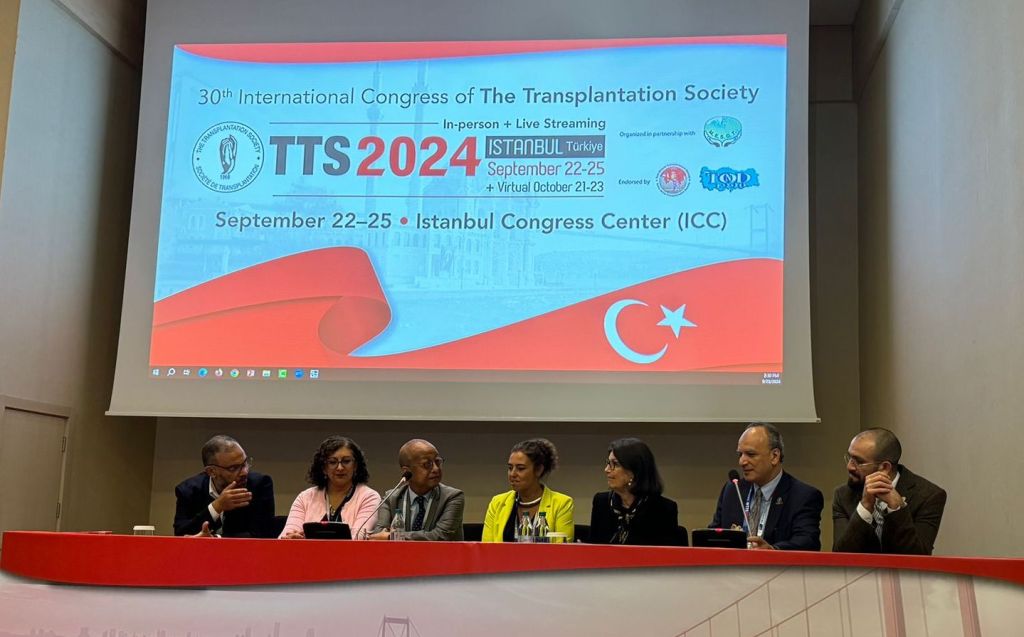
The key role that patients can play in transplant education was discussed on Day 2 during a workshop titled “Teaching the Transplant Teachers.” This session explored various educational strategies across diverse settings, including public outreach, schools, healthcare professionals, patient associations and patients themselves. Concrete examples of successful “train-the-trainer” programs were shared to illustrate best practices.
🔹 Dr. Ala Ali, Chloë Ballesté Delpierre, and Shilpanjali Jesudason led the presentations.
🔹 Dr. Ali, Consultant Nephrologist and Transplant Physician in Baghdad, Iraq emphasized that a transplant educator can come from various backgrounds—whether a healthcare professional (HCP), an allied health worker, or a transplant patient. The crucial factor, he noted, is a passion for sharing knowledge, combined with the ability to exchange information and advocate for improvements in organ donation and transplantation across different levels and settings. He stressed that such individuals must be recognized, supported, and provided with tailored training programs.
🔹 Chloë Ballesté Delpierre, who is Associate Professor of the University of Barcelona, Hospital Clinic researcher and Medical director at the Donation and Transplantation Institute (DTI Foundation) underscored how donation levels levels are still very low in certain parts of the world and how better transplant education has contributed to increasing the donor rate in a number of countries (examples were provided for Italy, Portugal and Croatia).
🔹 Two patients, Pisana Ferrari and Bill Wang, were invited on stage after the presentations to discuss the vital contributions patients can make to transplant education, sharing their perspectives on how the knowledge patients have, derived from direct experience, can enrich and strengthen the educational process.
🔹 Bill Wang, a liver-kidney transplant recipient and advocate, emphasized that being a patient doesn’t automatically translate into being an advocate. Advocacy, he explained, is an acquired skill that, like any other aspect of transplant education, requires proper training.
🔹 Pisana Ferrari mentioned a few examples of patient involvement in transplant education including an ESOT – European Society for Organ Transplantation workshop organised by a patient, herself, in collaboration with academic Alessandra Agnese Grossi, to “teach” young transplant professionals how to better communicate with patients, via simulations and role playing.
Day 2, abstract session on sex and gender in transplantation
On Day 2 there was also a very interesting abstract session on sex and gender, which have a significant impact in transplantation. This is a very relevant topic in pulmonary arterial hypertension not only because lung transplant is an important therapeutic option when treatment has failed, but also because this has historically been a condition which affects prevalently women (recent data are more nuanced).
🔹 The first speaker, Dr. Ana Cristina Breithaupt Faloppa, Brazil, raised an interesting point about how the general aging of the population is leading to more women donors being in menopause. She presented a study which reveals that menopause alters the lung’s inflammatory response induced by brain death by increasing the leukocyte infiltration, and this is a major problem. The administration of female sex hormones to prime donors before transplant is currently being investigated. The study was about lungs, but the speaker said in reply to one of the questions from the audience that this is seen in other organs.
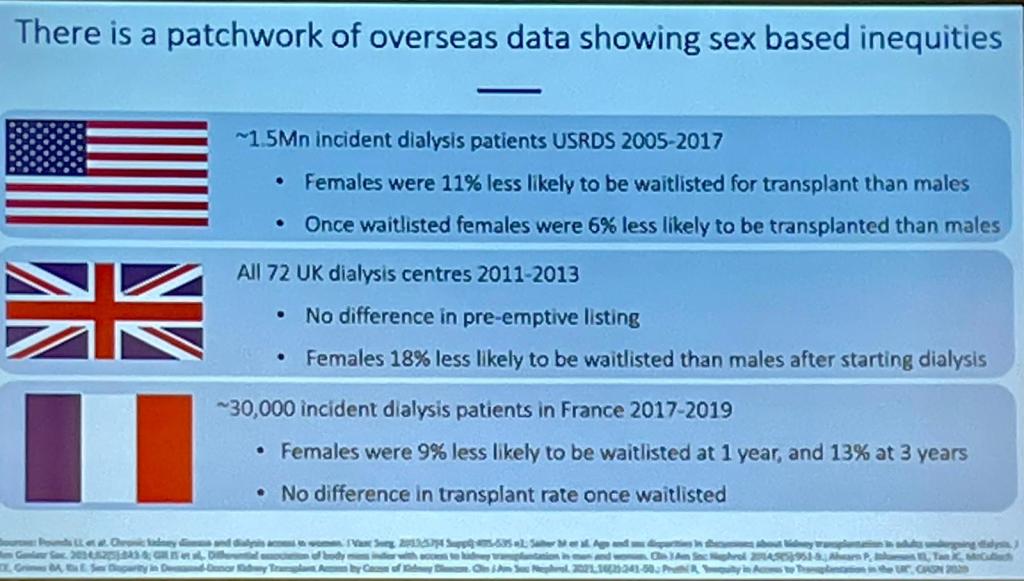
🔹 Gender disparities were the topic of another speaker, Stephen Alexander, Australia, who highlighted how these intersect with race, ethnicity, and socio-economic status, and how even in the case of co-morbidities or obesity, there are fewer women being listed compared to men. Compelling data were presented relative to the UK, USA, and France, as seen in the slide below. For example, in the US, out of 1.5 million incident dialysis patients during the period 2015-17, females were 11% less likely to be listed for transplant, and once listed, they were 6% less likely to be transplanted compared to men.
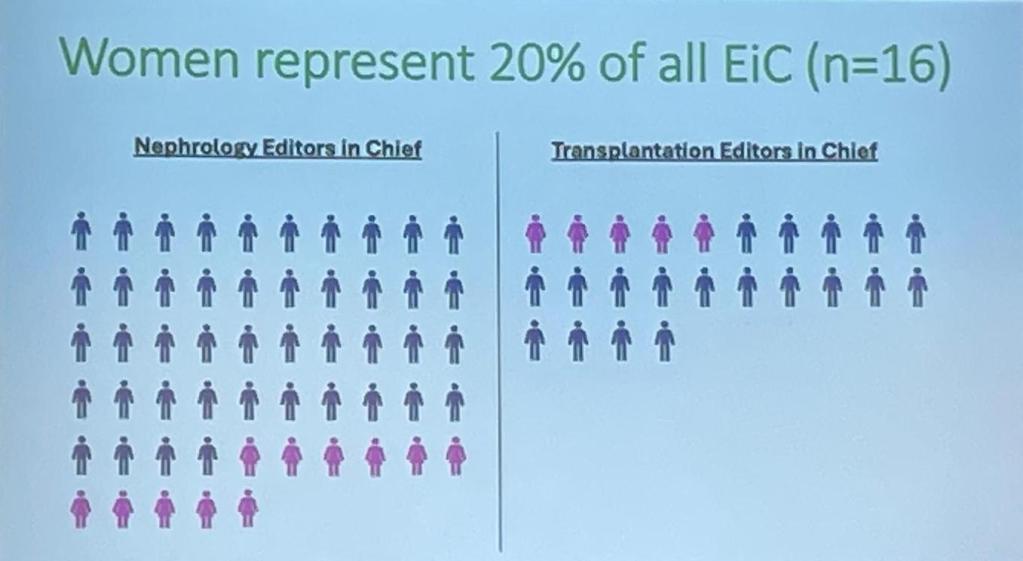
🔹 A third very insightful presentation by Prof. Kate Wyburn, Australia, revealed how the gender gap is also present in academic medicine, with fewer women likely to be associate or full professors or departmental chairs, less likely to be first or last author, less likely to be invited to review papers, and less likely to receive funding grants. Historically, they have been underrepresented as Editors-in-Chief in medicine, a key role in shaping research agendas and careers. The speaker presented data from nephrology and transplantation journals, where only 20% of those analyzed were women.
DAY 3, Patient centred care in transplantation
On Day 3 of The Transplantation Society (TTS)’s annual congress in Istanbul, a session focused on these themes, addressing critical issues affecting transplant recipients and live donors, including medication adherence, mental well-being, nutrition, physical exercise, and family dynamics.
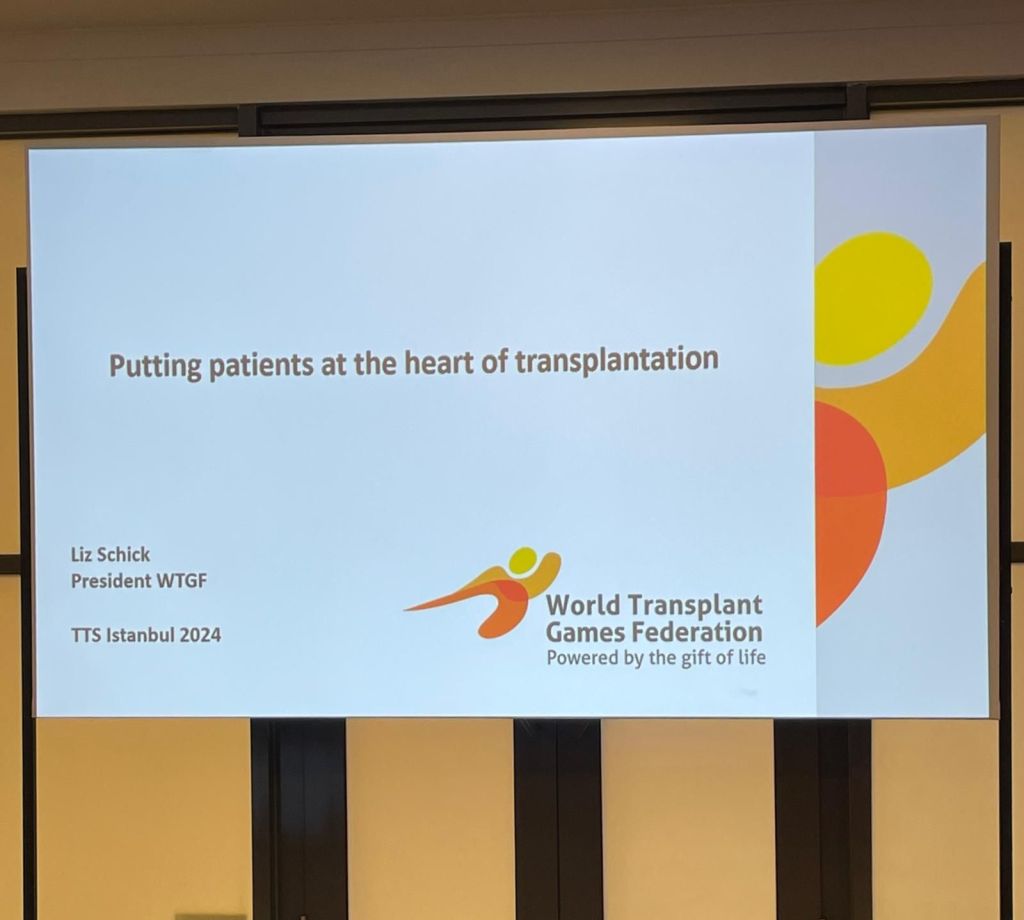
🔹 Liz Schick, a liver transplant recipient of 26 years and President of the World Transplant Games Federation, opened the session by praising the scientific community for their increasing inclusion of patients in transplant initiatives, with the hashtag #TTS2024 serving as an outstanding example of this collaborative approach. She highlighted physical exercise as vital for recovery and community connection.
🔹 A key challenge discussed was non-adherence to post-transplant care, especially among young adult kidney recipients, and the consequences in terms of complications and organ rejection. In the UK young adults 18-25 have the highest rate of graft loss among total kidney transplant recipients. Perceptions around transplant and medication beliefs (eg. concerns about long term effects) play a key role in non-adherence. Another focus was the health-related quality of life (HRQoL) of live kidney donors, with concerns around physical recovery, mental health, and long-term stability.
🔹For transplant recipients, anxiety and depression are prevalent issues, as highlighted by one of the studies presented, that can complicate both recovery and adherence to medical regimens. Integrating mental health services into the transplant care continuum is essential, ensuring that psychological well-being is given the same attention as physical recovery.
🔹 One speaker presented data on family dynamics and resiliency in paediatric live donor transplants, addressing the impact of these factors on both donors and recipients.
🔹 Nutritional management also emerged as a significant theme, with cultural factors playing a crucial role in dietary adherence post-transplant. An example was shared involving Turkish transplant patients, whose traditional diets are rich in protein and sodium, often conflicting with post-transplant dietary recommendations.
🔹 E-health tools, such as telemedicine and mobile apps, were also spotlighted for their potential to support patient adherence and improve communication with healthcare teams. A new Digital Behavioural Change Intervention (DBCI) tool called RENEW-HOPE was presented at the session, aimed at improving treatment adherence in young kidney transplant recipients.
Overall, the session emphasized the need for a holistic, multidimensional approach to care, integrating psychosocial support, cultural sensitivity, and technological innovation to enhance outcomes for both patients and donors.