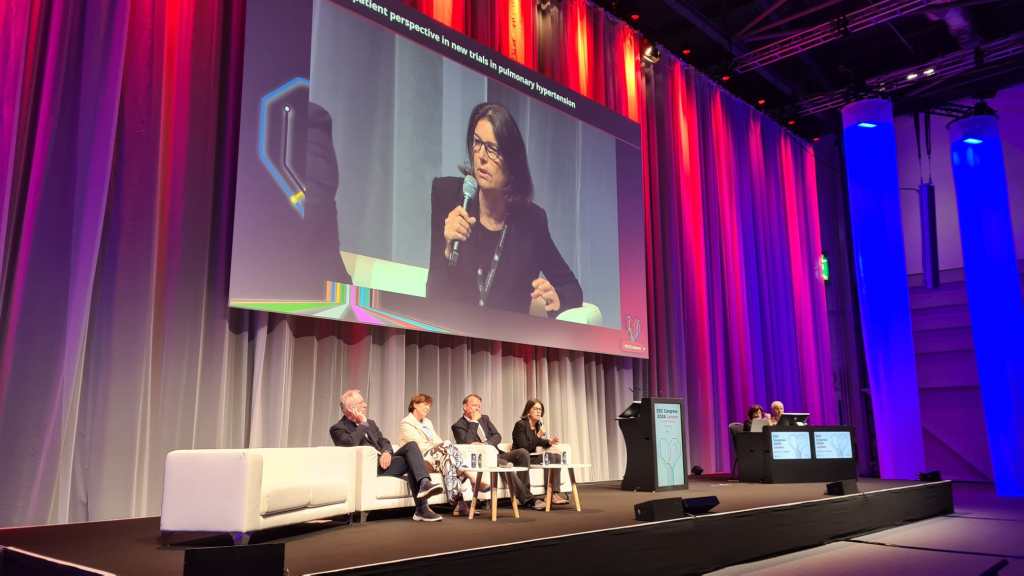
The European Society of Cardiology’s Congress is the foremost gathering in the field of cardiology worldwide. This year’s edition took place in London from 30.8-1.9, 2024, and counted 31,700 participants from 162 countries, including 5,400 faculty and presenters, representatives of the National Cardiac Societies and industry partners.
Pisana Ferrari, the Alliance for Pulmonary Hypertension’s Secretary General, was invited to speak on the topic of integrating the patient perspective into future pulmonary hypertension clinical trials.
🔹 In her talk Pisana underscored the invaluable knowledge patients bring, derived from firsthand experience with the disease, which can significantly augment the expertise of medical professionals. She noted that, Increasingly, patients are being recognized as essential contributors across EU institutions, regulatory bodies, scientific societies, academia, research institutes, and the healthcare industry.
🔹 In the realm of pulmonary hypertension, in particular, significant strides have been made, including the inclusion of patient representatives in the latest joint European Society of Cardiology /and European Respiratory Society clinical guidelines. Additionally, the establishment of a patient perspective task force within the World Symposium on Pulmonary Hypertension, the field’s premier scientific event, marks another critical advancement.
🔹 Despite these gains, however, patient involvement in research remains limited, as does the utilization of Patient-Reported Outcome Measures (PROMs), valuable tools for capturing the patient experience.
During the presentation Pisana highlighted key findings from a recent (2022) survey conducted by the European Medicines Agency (EMA) § which underscores the critical impact of patient input:
🔹 20% of the scientific advice responses provided by EMA to companies between 2017-2020 were modified following patient input.
🔹 Patient input prompted additional reflection by EMA procedure coordinators in over 50% of cases.
This data compellingly demonstrates that patient involvement should begin early in the drug development process.
Pisana also addressed the current challenges surrounding patient participation in clinical trials and the use of Patient-Reported Outcome Measures (PROMs). In this context, she put forward some thoughts for future trials:
🔹Enhanced patient information and education: Patient associations can play a pivotal role in improving awareness and understanding of clinical trials, including sharing findings, and about the value of the use of PROMs
🔹Decentralization of trials: Conducting some tests and visits from home or local healthcare facilities can ease the burden on patients.
🔹Use of digital health technologies: Allowing patients to provide data directly from home with wearables or other activity trackers, can streamline the trial process.
These recommendations aimed to foster a more patient-centered approach in clinical research, ultimately improving outcomes for all stakeholders involved.
§ The EMA report can be viewed at this link on the Frontiers journal website