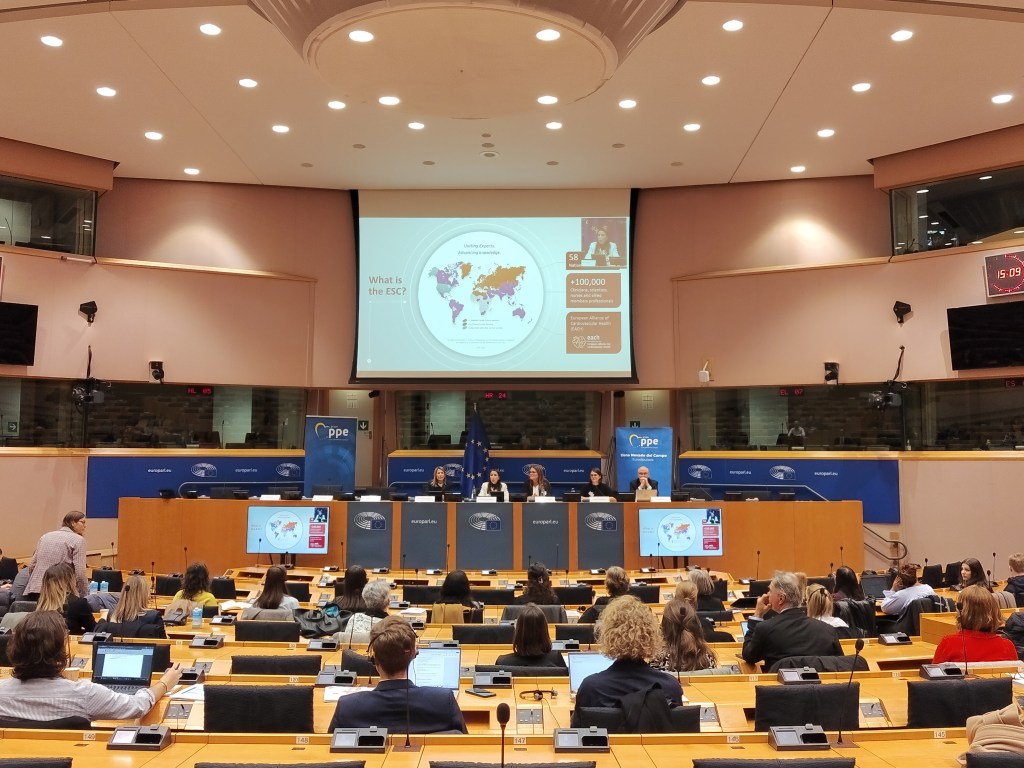
We were unfortunately unable to attend the European Parliament event which took place on March 5, 2025, but have read the minutes with great interest. Based on these we have put together some key takeaways as this topic is very relevant to pulmonary arterial hypertension patients, who are predominantly women.
Opening
Member of the European Parliament (MEP) Nevado del Campo opened the event, highlighting the upcoming International Women’s Day and emphasizing gender disparities in cardiovascular disease (CVD) mortality, prevention importance, and the upcoming European Cardiovascular Health Plan (2026).
Key Presentations
Assoc. Prof. Maria Rubini Gimenez (European Society of Cardiology)
- Cardiovascular disease is the leading cause of death in the EU (34% of deaths)
- Women face higher mortality than men from cardiovascular disease, exceeding all cancers combined
- Women are underrepresented in research and clinical trials
- Women-specific cardiovascular risk factors are often overlooked
- Geographic disparities exist across EU with death rates varying from 20% to 65%
- Key asks: Address cardiovascular disease gender inequality in the Gender Equality Strategy and integrate gender dimensions in the EU Cardiovascular Health Plan
Panel Discussion (Moderated by Member of the European Parliament Andras Kulja)
Key Points from Panelists:
- Women experience specific symptoms leading to delayed diagnosis and poorer outcomes
- Policymakers should support gender-specific research and awareness
- The need for gender-disaggregated data collection in all registries and drug approvals
- European Health Data Space offers opportunities for gender-based analysis
- Personalized medicine is promising but needs more gender-specific research
- Prevention opportunities during women’s healthcare touchpoints (e.g. pregnancy)
- Pharmaceutical companies should be required to provide gender-disaggregated data when applying for drug approvals
- Drug companies should be incentivized to recruit more women in clinical trials, potentially through commercial mechanisms
Recommendations for EU Cardiovascular Health Plan:
- Encourage research and investment with gender-specific approaches
- Include women in clinical trials
- Improve early diagnosis through systematic data collection
- Train healthcare professionals on gender-specific issues
- Center prevention in the European cardiovascular health plan
- Implement targeted actions in clinical care, education, and research
European Health Data Space and AI
Fulvia Raffaelli (Head of Unit, Digital Health, DG SANTE, European Commission):
- Gender-related bias in cardiovascular disease can be life-threatening
- Artificial intelligence can enhance efficiency and reduce healthcare costs
- The European Health Data Space will enable better identification of gender-specific risk factors and symptoms
- Strict privacy guidelines will protect health data while allowing AI training on diverse populations
- The European Health Data Space represents a transformative step for women’s health by reducing gender bias
Policy Outlook
Member of the European Parliament Dolores Montserrat:
- Women have 20% higher mortality following myocardial infarction
- Underrepresentation in clinical trials results in less effective treatments for women
- Called for the European cardiovascular health plan in 2026
- Emphasized early detection, healthcare professional training, and technological innovation
- Promised European Parliament would advocate for including the European cardiovascular health plan in the 2026 Work Programme
Conclusion
Assoc. Prof. Maria Rubini summarized the discussions, emphasizing that cardiovascular disease is the main killer in women and stressing collective responsibility to address the gender gap.